
LASER THERAPY
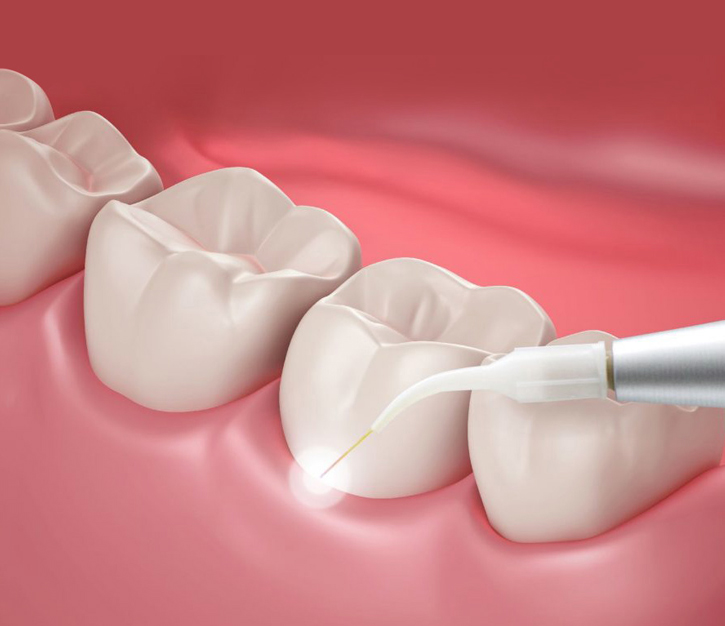
In recent years, laser dentistry has become increasingly popular and has replaced many traditional dental practices. This advancement in dentistry has made treatments more precise and less painful. Laser dentistry involves using intense beams of light from a dental laser to perform various treatments, such as shaping and removing soft tissue.
The FDA approved the use of dental lasers for public use in 1990, ensuring their safety. Since then, many dentists have integrated dental lasers into their everyday procedures. This has resulted in reduced bleeding, anxiety, and recovery time for patients. One of the major advantages of dental laser therapy is that they cause minimal damage to the surrounding tissue compared to traditional techniques. As a result, patients experience less discomfort and pain during and after the treatment.
What does Laser Therapy entail?
Laser dentistry is well-known for its exceptional ability to treat dental issues with minimal invasiveness. By harnessing the power of a concentrated light beam, lasers can efficiently remove and reshape soft tissue, provide valuable heat, and deliver numerous other advantages. Although laser therapy primarily concentrates on gum treatments, it is also widely used in various other dental procedures.
- Faster healing and tissue regeneration.
- Preservation of more of the natural tooth.
- Reduced bleeding during and after treatment.
- Reduced need for anesthesia.
- Reduced need for stitches and sutures.
- Reduced risk of bacterial infections after procedures.
What are the benefits of laser therapy for me?
Laser therapy is highly versatile and plays a crucial role in numerous common dental procedures. While it is commonly linked to cosmetic treatments, laser therapy is equally effective in preventive care.
There are several applications for dental lasers, including:
- Tissue reshaping process: Dental lasers have the ability to dissolve soft tissue, allowing for the exposure of more of the natural tooth (known as crown lengthening). They can also reshape soft tissue, enhancing the appearance of "gummy smiles." Additionally, dental lasers can effectively remove uncomfortable soft tissue folds that may arise from wearing dentures.
- Frenectomy: Lasers have the potential to enhance speech and feeding habits for individuals of all ages, as they can effectively address tongue-tie issues.
- Tumor removal: If benign tumors have developed in the soft tissue regions of the mouth, the use of a dental laser can effectively and painlessly eliminate them.
- Periodontal Disease: The laser is commonly employed to reduce bacteria in your gum pockets, promoting the growth of healthy tissue and bone.
Advantages of Laser therapy
Laser dentistry presents a reliable and effective remedy for a range of dental problems. Moreover, it offers numerous benefits, including:
- Offers a less painful alternative to invasive treatments
- Reduces swelling and bleeding during gum disease treatment
- Avoids the use of loud and uncomfortable drilling
- Preserves a greater amount of the teeth and gums